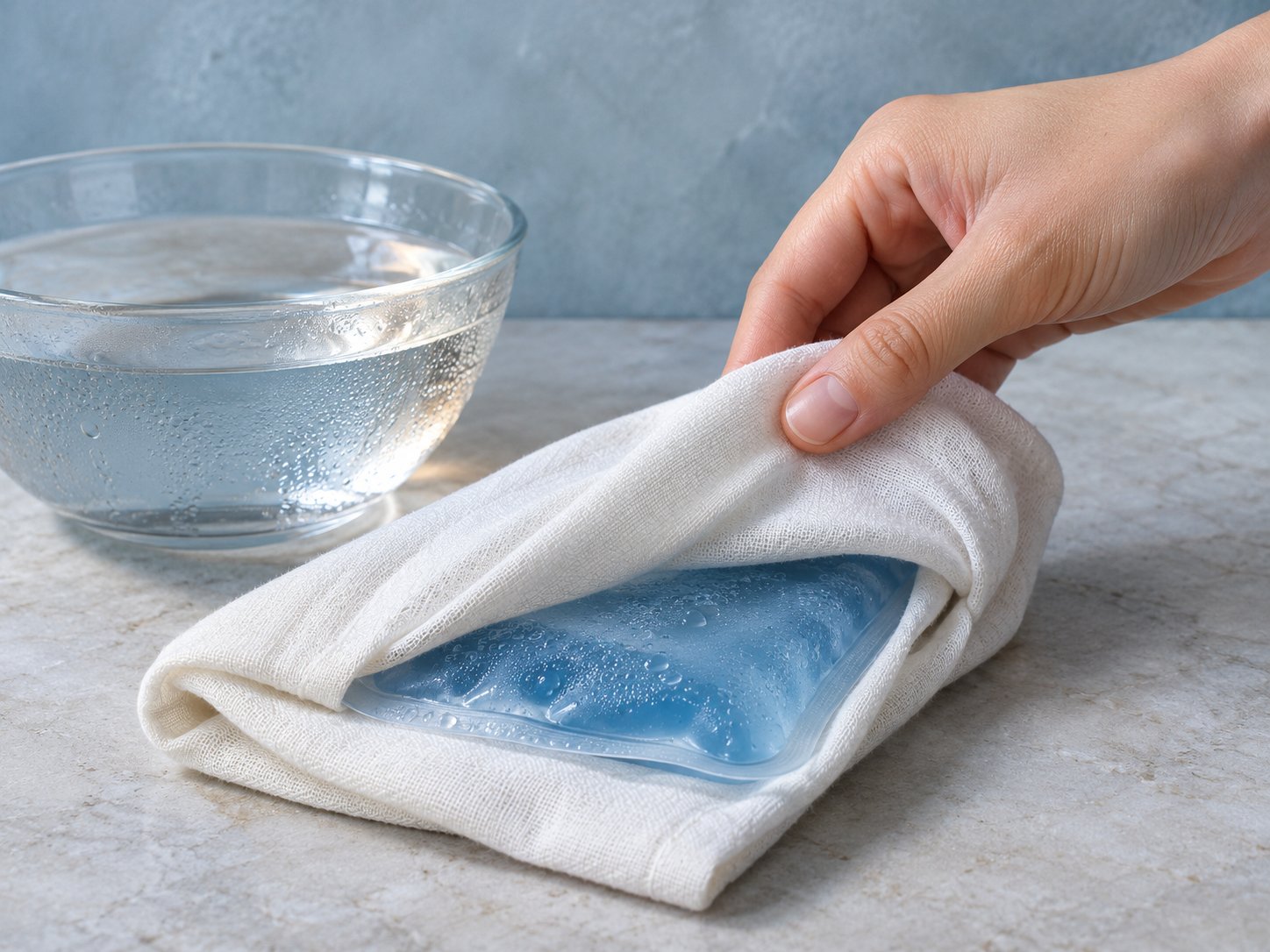
A cool compress can be useful for comfort after some procedures, but direct ice can injure skin. Cooling at home, liquid-nitrogen treatment by a clinician and whole-body cryotherapy are not interchangeable.
Key takeaways
- Cooling may temporarily reduce the sensation of heat and limit swelling after selected treatments, but it does not rebuild collagen or permanently tighten skin by itself.
- Do not place ice directly on skin. Use a clean barrier, brief intervals and the aftercare instructions for the specific procedure.
- Clinical cryotherapy intentionally destroys selected tissue; whole-body cryotherapy has unproven skin benefits and carries cold-injury risk.
What local cooling may do
Local cooling narrows superficial blood vessels and slows sensory signalling. That can temporarily reduce the feeling of heat, discomfort and visible swelling. The effect is supportive rather than transformative: once the skin warms, circulation and appearance move back toward baseline.
Cooling is not appropriate after every procedure. Some treatments depend on a controlled thermal response, and aggressive cooling could interfere with the intended endpoint or make it harder to recognise an early burn. Always use the method and timing supplied by the treating professional.
Use cool—not extreme—temperatures
A clean, cool compress is easier to control than a bare ice cube. If your provider approves a cold pack, wrap it in a clean soft cloth, keep pressure light, use short intervals and inspect the skin frequently. Stop if the skin becomes very pale, mottled, painful, hard or persistently numb.
Do not fall asleep with a cold pack in place. Avoid prolonged cooling over skin with reduced sensation or circulation, and ask a clinician first if you have Raynaud phenomenon, cold urticaria, neuropathy or another condition that changes your response to cold.
Do not confuse three very different practices
Home cooling aims to preserve tissue and improve comfort. Dermatologic cryotherapy uses substances such as liquid nitrogen to freeze and destroy a specific lesion. It is a clinical procedure with risks that include pain, blistering, pigment change, scarring and tissue injury.
Whole-body cryotherapy exposes most of the body to extremely cold air for a short period. The American Academy of Dermatology notes that claimed benefits have not been proven and warns about injuries including frostbite. It should not be presented as a stronger version of a cool facial compress.
Be cautious with cosmetic claims
Temporary vessel constriction can make puffiness or redness look reduced for a short time. That does not demonstrate permanent pore reduction, detoxification, collagen remodelling or fat loss. Photographs taken immediately after cooling may capture a transient effect.
Research on controlled superficial cooling continues, including studies comparing the skin-temperature effects of ice and gel packs. Those findings should be applied to the exact method and population studied, not used to justify unmonitored icing at home.
When to stop and seek advice
Remove the cold source immediately if pain increases, sensation disappears or the skin changes to a white, grey, blue or blotchy colour. Persistent numbness, blistering, marked swelling or a wound needs medical assessment.
After an aesthetic procedure, contact the treating clinic if cooling does not control expected discomfort or if symptoms are escalating. Do not use cold to mask a reaction that should be examined.
Sources and further reading
- American Academy of Dermatology Whole body cryotherapy: Can extreme cold improve your health?
- MedlinePlus Cryotherapy for the skin
- National Library of Medicine Cryotherapy in Dermatology
- PubMed Clinical trial of superficial skin cooling