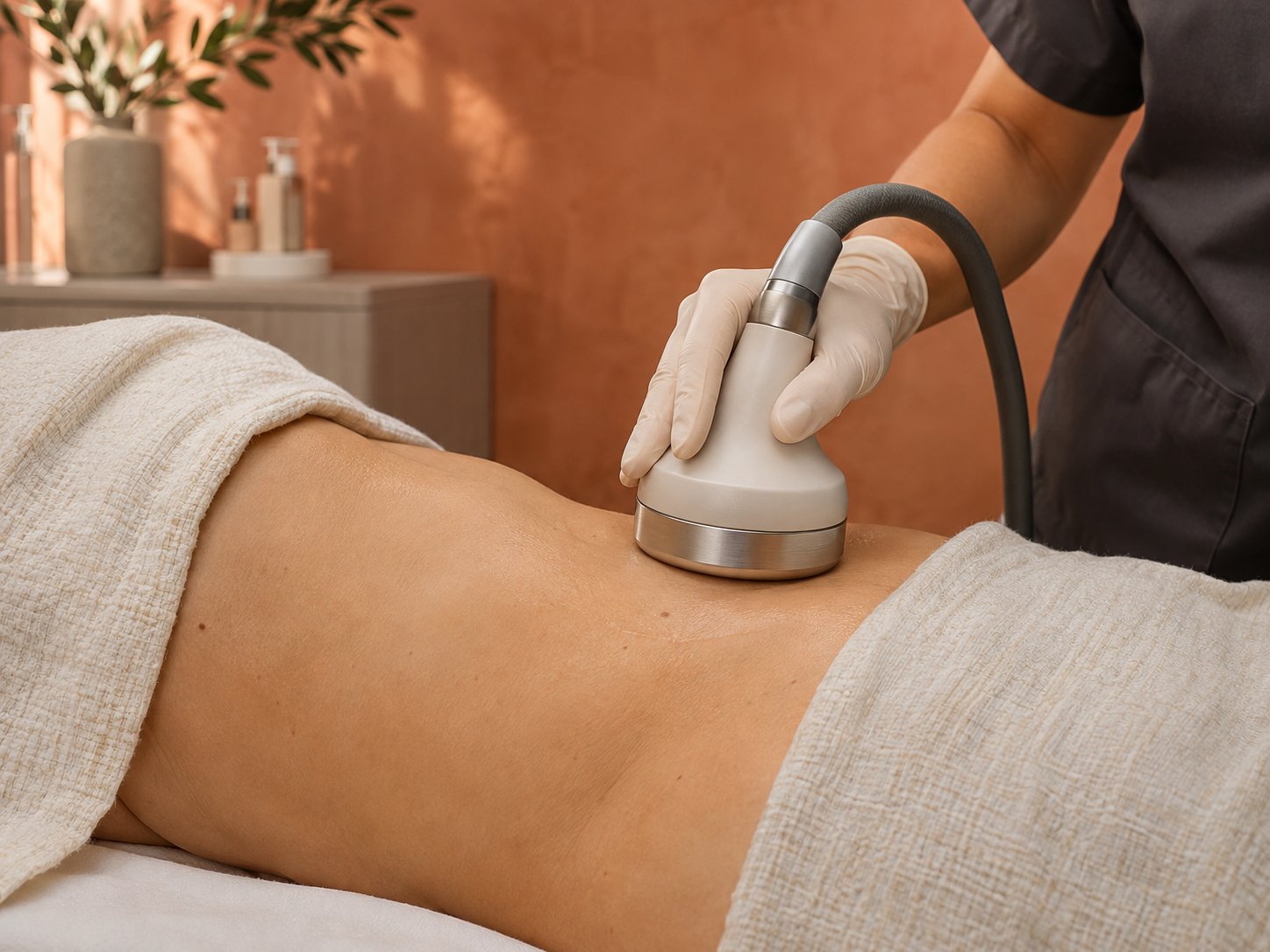
Body RF devices use controlled heating in an effort to change the appearance of skin or underlying tissue. Some systems add vacuum, massage or electromagnetic muscle stimulation. The treatment goal must be defined clearly: temporary circumference change, smoother-looking cellulite and firmer-looking skin are not the same as fat loss or weight management.
Key takeaways
- Non-invasive body contouring is not a treatment for obesity and does not provide the health benefits of weight loss.
- The FDA describes RF results for circumference, cellulite and tightness as potentially temporary and variable.
- Combination RF and muscle-stimulation systems are promising, but much of the newer evidence is device-specific and some studies are small.
Define the target before choosing a device
RF can be used with different goals: heating the dermis to support a firmer appearance, heating subcutaneous tissue as part of a contouring protocol, or temporarily improving the appearance of cellulite. The device design, treatment depth and energy settings should match the target.
A measurement taken immediately after treatment can be affected by fluid movement, compression and positioning. Meaningful evaluation needs consistent landmarks, technique and follow-up. Weight, hydration and menstrual-cycle changes can also influence circumference.
What is new: synchronised combination systems
A newer category combines RF heating with high-intensity electromagnetic or electrical muscle stimulation. The proposed benefit is to address skin, fat and muscle in one session, but each component has its own mechanism and eligibility criteria.
A 2024 systematic review identified 15 clinical studies of high-intensity focused electromagnetic treatment, but only two evaluated the version combined with RF. Across abdominal studies, the review reported average changes in fat and muscle thickness, while also noting that two studies found marginal or no benefit, no study reported weight change and some reports lacked important demographic or missing-data details.
A separate 2024 multicentre MRI study of four flank treatments reported increases in oblique-muscle measurements and decreases in adipose-tissue measurements at follow-up. Those results apply to the studied device and protocol; they do not establish that every RF or muscle-stimulation platform produces the same effect.
Other systems combine RF with vacuum or mechanical massage for cellulite. Improvement in surface appearance may not mean that fat cells were permanently removed.
How to read body-contouring claims
Look for prospective studies that state enrolment, withdrawals, adverse events, follow-up time and how measurements were blinded or standardised. A photograph, satisfaction score or average circumference change answers a different question from imaging, tissue analysis or a controlled comparison. A 2025 study of an RF-only device included 15 volunteers and reported changes in circumference, fat thickness and dermal ultrasound measures after eight sessions, but the authors were employees of the device company and the trial was not publicly registered.
Check whether authors or investigators have financial ties to the manufacturer and whether the study evaluated the exact model being offered. Industry involvement does not automatically invalidate research, but it should be visible when judging confidence.
Screening and possible risks
The FDA lists pain, redness, swelling, blisters, burns, nodules, pigment changes and scars among potential complications of non-invasive body contouring technologies. Risk depends on the device and the person being treated.
Tell the provider about pregnancy, skin disease or infection in the area, impaired sensation or circulation, hernia, recent surgery, scars and all implanted devices or metal. Some RF and electromagnetic systems are unsuitable around electronic implants or certain metals. The device instructions and a qualified medical assessment should guide the decision.
A useful consultation is measurable and specific
Ask what tissue the treatment is intended to affect, how success will be measured and how long results have lasted in comparable patients. Confirm the number of sessions, total cost, maintenance expectations and what happens if the desired change is not achieved.
A responsible plan should include alternatives—including doing nothing—and should not promise a surgical result from a non-invasive procedure.
Sources and further reading
- U.S. Food and Drug Administration Non-Invasive Body Contouring Technologies
- Aesthetic Plastic Surgery High-Intensity Focused Electromagnetic Energy With and Without Radiofrequency for Noninvasive Body Contouring: A Systematic Review
- Aesthetic Surgery Journal Synchronized Radiofrequency and HIFEM for the Flanks: A Multicenter MRI Study
- Lasers in Surgery and Medicine Body Shaping and Skin Appearance Improvement in the Abdomen and Flanks by Radiofrequency Technology